
Temporary vs Permanent Change of Address: Which Should You Choose?
Filing a USPS Change of Address but not sure which type to select? This guide breaks down the differences between temporary and permanent mail forwarding to help you choose correctly.
You can also send mail online; we print, stamp, and hand your mail to USPS.
Quick Answer
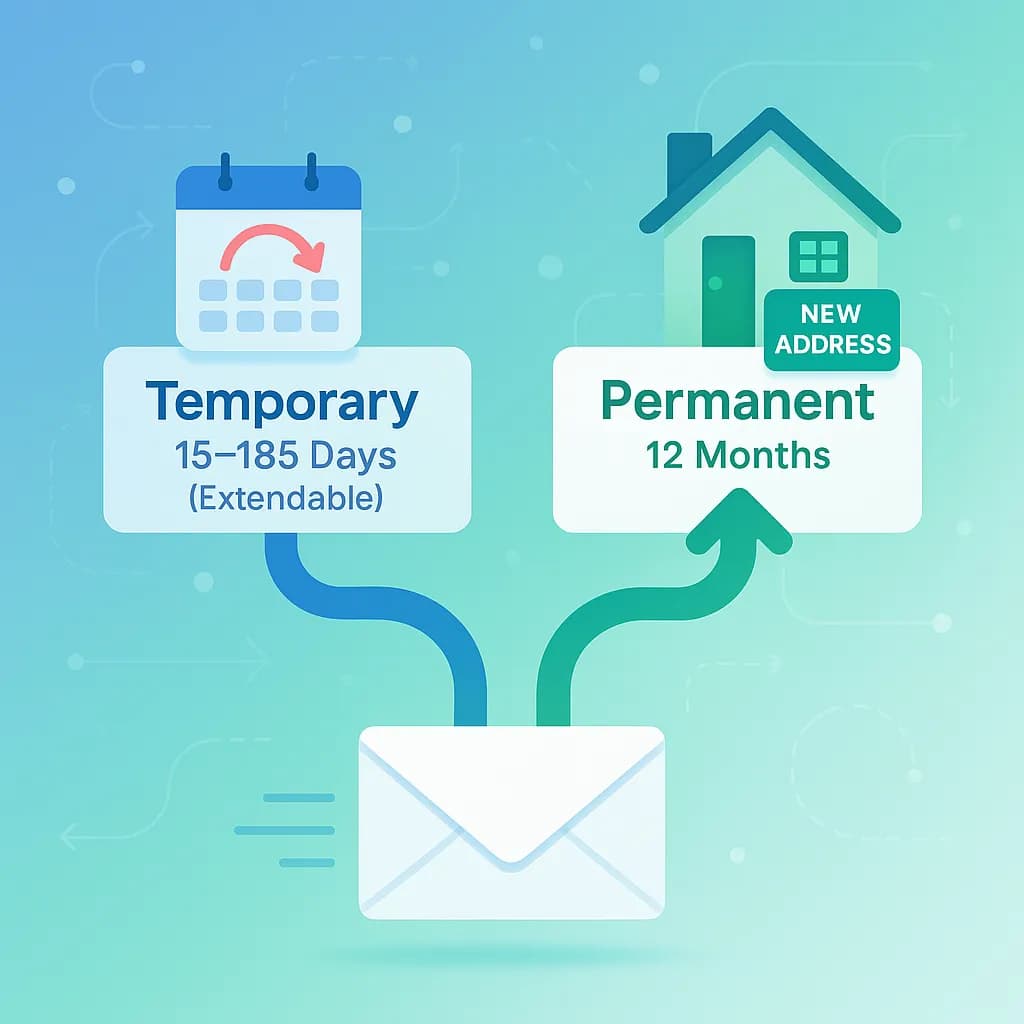
- Choose TEMPORARY if: You're away for vacation, travel, medical stay, seasonal residence, or temporary work assignment (up to 6 months initially, extendable to 12 months)
- Choose PERMANENT if: You're actually moving to a new home and won't return to the old address
Side-by-Side Comparison
| Feature | Temporary | Permanent |
|---|---|---|
| Duration | 15–185 days (extendable up to 12 months total) | 12 months |
| End Date | You specify return date | Expires automatically |
| Senders Notified | No | Yes (new address shared) |
| Best For | Travel, seasonal stays | Actual moves |
| After Expiration | Mail resumes to old address | Mail returned to sender |
| Cost | $1.10 online / Free by mail | $1.10 online / Free by mail |
Temporary Change of Address
How Temporary COA Works
Temporary forwarding is designed for short-term absences. When you file a temporary COA:
- • Mail forwards to your temporary address during your specified dates
- • After your return date, mail automatically resumes to your original address
- • No action needed to restore delivery—it happens automatically
- • Senders are NOT notified of your temporary address
When to Use Temporary
- ✓ Extended vacation or travel (15 days to 12 months with extension)
- ✓ Seasonal residence (snowbirds, summer homes)
- ✓ Temporary work assignment or internship
- ✓ Medical stay or recovery at another location
- ✓ Temporary housing during home renovation
- ✓ College students home for summer
Temporary Duration & Extension
- • Initial period: 15–185 days (about 2 weeks to 6 months)
- • Extension: Can be extended up to 12 months total by filing a second temporary COA
- • Must specify exact return date when filing
- • Address updates not shared with senders
Permanent Change of Address
How Permanent COA Works
Permanent forwarding is for actual moves to a new address. When you file a permanent COA:
- • First-Class Mail forwards for 12 months
- • Periodicals/magazines forward for 60 days only
- • Your new address IS shared with senders (via Address Correction Service)
- • After 12 months, mail is returned to sender as "Unable to Forward"
When to Use Permanent
- ✓ Moving to a new home (renting or buying)
- ✓ Relocating for a job
- ✓ Leaving an address you won't return to
- ✓ Moving for college (if not returning home)
- ✓ Downsizing or consolidating households
Important: Senders Get Your New Address
With permanent COA, USPS shares your new address with certain senders through the National Change of Address (NCOA) database. This helps businesses update their records but also means your new address won't stay private. If privacy is a concern, consider USPS Hold Mail instead for short absences.
Need more than 12 months? You can purchase Extended Mail Forwarding for permanent COA only (not available for temporary).
Common Scenarios
"I'm going to Florida for 3 months this winter"
Answer: Temporary
Classic snowbird scenario. File temporary COA with your Florida address and return date. Mail will automatically resume to your regular address when you come back.
"I'm moving to a new apartment across town"
Answer: Permanent
You're leaving your old address for good. File permanent COA and update your address with important senders within the 12-month forwarding window.
"I'm staying with family for 2 months while my house is renovated"
Answer: Temporary
You'll return to your original address. Temporary COA ensures mail finds you during construction and returns to normal automatically.
"My college student is coming home for the summer"
Answer: Temporary
File temporary COA from their dorm to your home address with their return-to-school date. Mail resumes to dorm automatically in fall.
"I'm moving across the country for a new job"
Answer: Permanent
Long-distance relocation = permanent move. File permanent COA and use the 12 months to update all your accounts to the new address.
Can You Switch Between Temporary and Permanent?
Temporary → Permanent
Yes. If your temporary stay becomes permanent, file a new permanent COA. The new request will override the temporary one.
Permanent → Temporary
Not directly. You'd need to file a new COA back to your original address, then file a temporary if needed. It's better to choose correctly the first time.
Cancel Either Type
Yes. Both temporary and permanent COA can be cancelled by visiting your post office or calling USPS. See our cancel mail forwarding guide.
Frequently Asked Questions
What is the difference between temporary and permanent Change of Address?
Temporary COA lasts 15–185 days (about 2 weeks to 6 months) initially and can be extended up to 12 months total by filing a second temporary order. It automatically ends on your return date and does not notify senders. Permanent COA lasts 12 months, notifies senders of your new address via NCOA, and is designed for actual moves.
How long does temporary mail forwarding last?
Temporary mail forwarding starts at 15 days and can run up to 6 months (185 days) for the initial order. You can extend it up to 12 months total by filing a second temporary Change of Address. After your return date, mail automatically resumes delivery to your original address.
How long does permanent mail forwarding last?
Permanent mail forwarding lasts 12 months for First-Class mail and 60 days for magazines/periodicals. After that, mail is returned to sender or discarded. You can also purchase Extended Mail Forwarding for additional months.
Can I change temporary COA to permanent?
Yes, you can file a new permanent Change of Address while a temporary one is active. The new request will override the temporary forwarding.
Does permanent Change of Address share my new address with companies?
Yes. With permanent COA, USPS shares your new address with certain senders through the National Change of Address (NCOA) database. This helps businesses update their mailing lists but means your new address won't stay completely private. Temporary COA does not share your address with senders.
Need to Send Important Mail?
Certified Mail provides tracking and proof of delivery or attempted delivery—helpful when you need documentation during a move.